
Crate Training Your Puppy
Introduced the right way, a crate becomes a safe den your puppy chooses to rest in - never a cage. The secret is to go slow and make every step positive, so your puppy learns their crate is the best spot in the house.
Follow the steps below to build genuine love for the crate, at your puppy's pace.
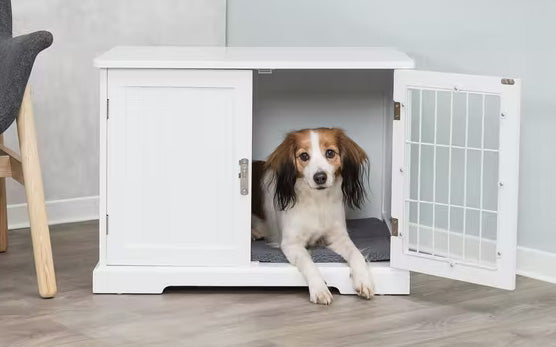
Why Crate Train at All?
A crate gives your puppy a secure place to settle, helps enormously with toilet training, keeps them safe when you can't supervise, and makes travel and vet visits far less stressful. The one rule: it only works if your puppy goes in willingly. Force turns the den into a punishment.
Step 1: Introduce the Crate Gradually
Place the crate somewhere your puppy can reach it easily but is still near the family - a comfy crate at the far end of the house won't get used. Line the floor with non-slip bedding such as vet bedding, so your puppy doesn't skid or startle if the crate shifts and makes a noise.
Leave the door open and let your puppy investigate at their own pace. Make it inviting by tossing a treat or two inside for them to venture in after.
Step 2: Make the Crate a Good Place to Be
When you're not actively training, leave the crate open with your puppy's bed, toys and chews inside, so they start to see it as a great place to play or snooze. Feed meals, treats and chews in there too. Keep the door open at first, then build up to gently closing it as your puppy grows to love the space.
Step 3: Build Up Time with the Door Closed
Once your puppy happily trots in and out, close the door for a single second, then open it again and let them out. Slowly extend the time as they stay relaxed.
When they're settled with the door shut and you in sight, step out of the room for a few seconds, then return. Build this up gradually so your puppy never becomes distressed. Reward calm behaviour by dropping a treat in just before you open the door.
If your puppy barks, whines or paws the door, wait for a calm moment - such as standing quietly and looking at you - before opening it. This teaches them that calm, not noise, is what opens the door.
Step 4: Longer Settles with Something to Do
If you want your puppy to settle for longer, always leave them with something to occupy them - a stuffed KONG or a puppy-appropriate interactive toy works well and builds a positive association with crate time.
A good rule of thumb: no more than one hour in the crate per month of age, and ideally no more than a few hours a day in total. Always leave fresh water available.
Puppy Crate Essentials
A crate that fits
Choose a crate big enough for your puppy to stand, turn and lie down comfortably. If you're buying for a growing pup, a crate with a divider lets you expand the space as they grow, which also helps with toilet training. Our team can help you size one correctly.
Best forNon-slip vet bedding
Soft, machine-washable vet bedding gives sure footing and a cosy base, so your puppy settles quickly and doesn't slip. It wicks away moisture too, which is handy during toilet training.
Best forKONG Puppy - the settle toy
Made from softer rubber for puppy teeth, the KONG Puppy stuffs with treats or puppy food to keep them happily occupied in the crate. Freeze it to make it last longer and soothe sore teething gums.
Best forFrom €8.35
Shop KONG PuppyTraining treats & puppy food
Small, tasty rewards like KONG Puppy Snacks make it easy to reward every calm, brave step into the crate. Feeding meals in the crate helps too - browse our puppy food range to keep their growing tummy happy.
Best forTreats from €8.70
Shop Puppy FoodFrequently Asked Questions
How do I introduce a crate to a new puppy?
Introduce the crate gradually by placing it where your puppy can access it freely, near the family. Leave the door open and let them explore at their own pace. Make it appealing with non-slip bedding inside and treats tossed in, so your puppy associates it with good things. Never force your puppy into the crate.
How long can I leave my puppy in a crate?
A good rule is no longer than one hour per month of age. Ideally you shouldn't crate your dog for more than a few hours a day in total. Always leave fresh water available and never use the crate as a punishment.
What should I put in my puppy's crate?
Non-slip bedding such as vet bedding for grip and comfort, plus your puppy's favourite toys to build positive associations. For longer settles, add a stuffed KONG or an interactive toy. Always leave fresh water available.
What do I do if my puppy barks or whines in the crate?
Return to the crate but wait for a calm behaviour - such as standing quietly and looking at you - before opening the door. This avoids teaching your puppy that barking opens the crate. If barking continues, check whether you've left them too long or they need a toilet break, and adjust.
Should I cover my puppy's crate?
Many puppies settle better with a light cover over part of the crate, as it makes the space feel more den-like. Leave good airflow and make sure your puppy can still see out if they prefer. Watch how your individual puppy responds and adjust to suit them.
Shop Puppy Essentials at Petstop
Ireland's largest pet retailer - 14 stores nationwide and next-day delivery on orders over 29 euros.
Shop Crates & Carriers Shop Puppy Food


